Friday, July 31, 2009

charts and daily goals

Benjamin Franklin, genius.


This excerpted from Maira Kalman's And the Pursuit of Happiness blog. You should check it out, it's pretty awesome.

Thursday, July 30, 2009

nausea and seduction


JILIN CITY, China — Tian Lihua was just beginning her morning shift when she felt a wave of nausea, then numbness in her limbs and finally dizziness that gave way to unconsciousness. In the days that followed, more than 1,200 fellow employees at the textile mill where Ms. Tian works would be felled by these and other symptoms, including convulsions, breathing difficulties, vomiting and temporary paralysis.

“When I finally came to, I could hear the doctors talking but I couldn’t open my eyes,” she said weakly from a hospital bed last month. “They said I had a reaction to unknown substances.” -from this article by Andrew Jacobs for the NY Times


ON a recent evening, an unusual experiment took place at a lounge in downtown Manhattan. Nine blindfolded women were asked to determine, by smell alone, whether any among a group of nine men was worth pursuing.

Three men had just showered using a body wash with synthesized pheromones, three had used a body wash without pheromones, and the rest had worked up a sweat and not washed at all. They then rubbed their arms on scent strips, and handed them to the women to sniff. -from this article by Camille Sweeney for the NY Times

And in more architectural news, White Roofs Catch On as Energy Cost Cutters.

Wednesday, July 29, 2009

found text


-all images from the internet, of course-

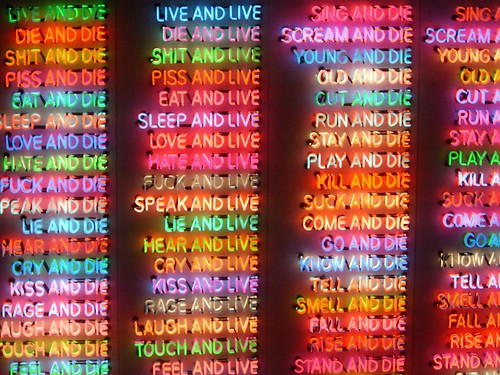
Coming across the Bruce Nauman-esque pieces prompted me to look him up. It's nice to know that "since 1979, Nauman has lived on a ranch near Galisteo, New Mexico, where, in addition to continuing his studio practice, he breeds horses." (this from a short bio here at the Dia Beacon website- a few years ago I went there and was amazed by its building and collection, which included a lot of Nauman's work.)

This one below, One Hundred Live and Die, from 1984, can be found at the Naoshima Contemporary Art Museum in Kagawa, Japan.


Also, I started reading Eccentric Spaces, by Robert Harbison, today- more on that later. I like it so far.

Tuesday, July 28, 2009

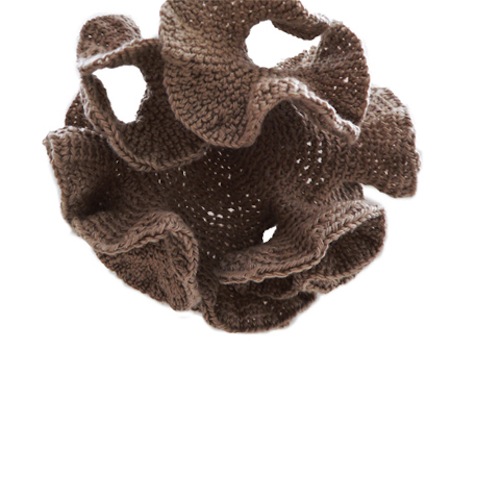
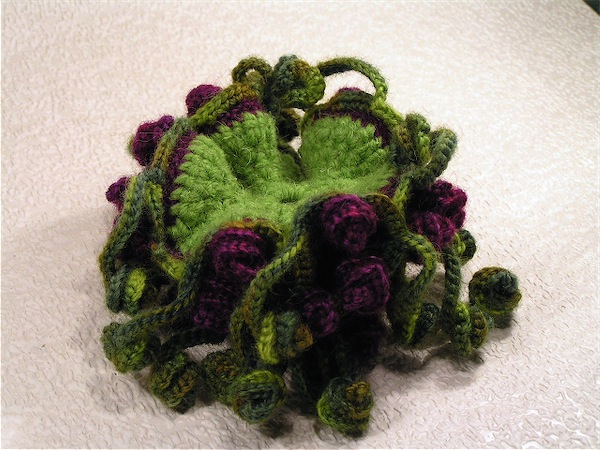
coral figuring

Margaret Wertheim- amazing!


At The Institute for Figuring,
more pictures of crochet coral


regarding your thesis

(Thanks Sarah)

For Vien

three acts regarding your thesis:

1. Copying: recreate an existing collection (the scent exhibition? the smelling salts collection?) [perhaps remove the actual object...a sent-less scent exhibition where you ask your participants to imagine the experience of smelling a certain thing...a smelling salts collection where the bottles are purchased from ikea?] the idea is to exercise your curatorial instincts without concern for the content.

2. Composing: take your blog-posts to the next level...make your own website or e-book or book or magazine with minimal text contribution from yourself...working with your existing material but taking more control over the format and presentation. (maybe include marketing or distributing the composition...)

3. Writing: curate an installation or exhibit for which you play docent. repeatedly explaining the significance of your collection could help you work out your text

s

300 words

This is more like 400 words... apparently I can really spit it out when it's about me, my insecurities and lack of confidence. How frustrating for everyone. For a refresher on what I'm talking about, thesis-structure-wise, check out this post.

I've been feeling pretty out of sorts this past while and I want things to change. Or is it more active for me to say, I want to change...? Because I do...

Other thoughts: I go back and forth in my mind and in conversations with people about the role of scent in my thesis. Another thing that comes up now and then when I think about it is design... it's not that I think this should be a "DESIGN" thesis but I feel that there's something missing. Could that thing be design? I don't even know what I'm talking about. In any case, it is kind of nice to be posting again. Here are we go.


300 words on the danger of my thesis stand, July 21st, 2009- eclipse!

I think I’ve already complained that I’ve been seeing everything in nothing these days- how I’m concerned that this whole thesis endeavour has been smoke and mirrors of my own doing... (undoing, desire, delusion?) The danger of seeing everything in nothing is that it inevitably turns to the worry or realisation that perhaps there is nothing to see when looking at everything. Is it possible to see the void that connects matter without addressing the matter at hand? (Where is the substance? Is this like a figure ground thing? Can everything be made architectural-sounding? Why am I resistant to this?)

Or is the danger actually that I hope to look at ‘everything’ (or at least a lot- a diverse lot) but say nothing? If I were to present a book with no thesis- that is, a thesis book with no overarching statement or intent, would it still be a thesis? I imagine a book of short essays- writing on topics loosely filed under the physical constraints of curiosity cabinet, garden, and places of worship.

Perhaps the real danger of my thesis resides in its passivity- not only my listlessness in doing (trying to do) it, but the emptiness of a thesis without an explicit statement; will there be anything to grasp or hold onto? (defend?) Is there magic in a cabinet waiting to be filled, a plot of soil to be seeded, a wonderful place with no inhabitants? Even when these spaces are filled and subsequently described, it will still be up to the viewer to overcome the inertia of only seeing in order to be touched. Does the premise of my thesis rely too much on the reader to make sense of it, to see the point of it?

Sure, a book in itself is a passive object, waiting for someone to open its covers and give its existence purpose. But what to make of a book that only kind of shows (hopefully revealing something unknown/unacknowledged?) but remains largely mute? Is it too much to ask the reader to feel, think, remember, and look beyond the words to make/find their own meaning in the work? Because as the creator of this work I’m already confused before I’ve really begun. I feel too lost to begin. While it’s not necessarily dangerous (and perhaps even good sometimes) for a reader to be confused, it’s dangerous if it leads to boredom. (indifference, paralysis.)