Wednesday, July 29, 2009

found text


-all images from the internet, of course-

Coming across the Bruce Nauman-esque pieces prompted me to look him up. It's nice to know that "since 1979, Nauman has lived on a ranch near Galisteo, New Mexico, where, in addition to continuing his studio practice, he breeds horses." (this from a short bio here at the Dia Beacon website- a few years ago I went there and was amazed by its building and collection, which included a lot of Nauman's work.)

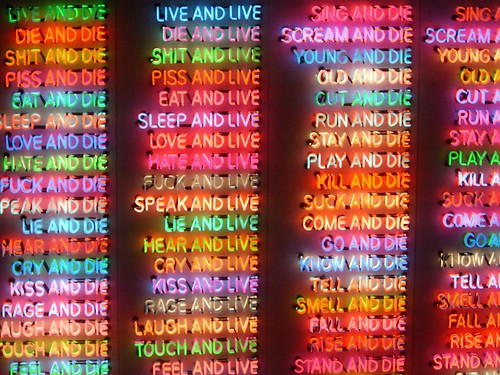
This one below, One Hundred Live and Die, from 1984, can be found at the Naoshima Contemporary Art Museum in Kagawa, Japan.


Also, I started reading Eccentric Spaces, by Robert Harbison, today- more on that later. I like it so far.

Tuesday, July 28, 2009

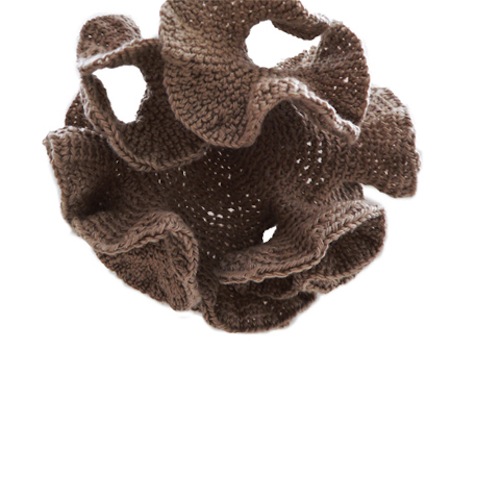
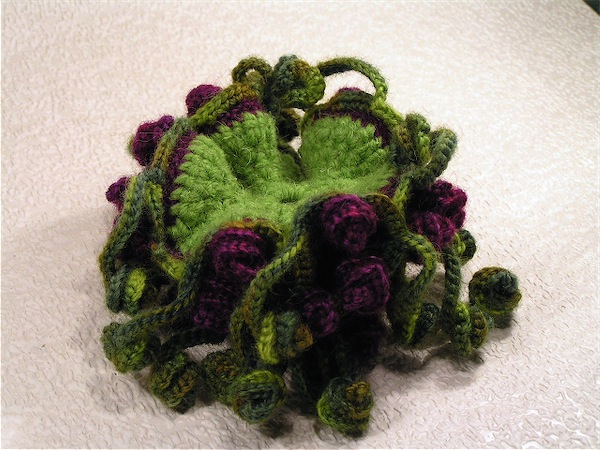
coral figuring

Margaret Wertheim- amazing!


At The Institute for Figuring,
more pictures of crochet coral


regarding your thesis

(Thanks Sarah)

For Vien

three acts regarding your thesis:

1. Copying: recreate an existing collection (the scent exhibition? the smelling salts collection?) [perhaps remove the actual object...a sent-less scent exhibition where you ask your participants to imagine the experience of smelling a certain thing...a smelling salts collection where the bottles are purchased from ikea?] the idea is to exercise your curatorial instincts without concern for the content.

2. Composing: take your blog-posts to the next level...make your own website or e-book or book or magazine with minimal text contribution from yourself...working with your existing material but taking more control over the format and presentation. (maybe include marketing or distributing the composition...)

3. Writing: curate an installation or exhibit for which you play docent. repeatedly explaining the significance of your collection could help you work out your text

s

300 words

This is more like 400 words... apparently I can really spit it out when it's about me, my insecurities and lack of confidence. How frustrating for everyone. For a refresher on what I'm talking about, thesis-structure-wise, check out this post.

I've been feeling pretty out of sorts this past while and I want things to change. Or is it more active for me to say, I want to change...? Because I do...

Other thoughts: I go back and forth in my mind and in conversations with people about the role of scent in my thesis. Another thing that comes up now and then when I think about it is design... it's not that I think this should be a "DESIGN" thesis but I feel that there's something missing. Could that thing be design? I don't even know what I'm talking about. In any case, it is kind of nice to be posting again. Here are we go.


300 words on the danger of my thesis stand, July 21st, 2009- eclipse!

I think I’ve already complained that I’ve been seeing everything in nothing these days- how I’m concerned that this whole thesis endeavour has been smoke and mirrors of my own doing... (undoing, desire, delusion?) The danger of seeing everything in nothing is that it inevitably turns to the worry or realisation that perhaps there is nothing to see when looking at everything. Is it possible to see the void that connects matter without addressing the matter at hand? (Where is the substance? Is this like a figure ground thing? Can everything be made architectural-sounding? Why am I resistant to this?)

Or is the danger actually that I hope to look at ‘everything’ (or at least a lot- a diverse lot) but say nothing? If I were to present a book with no thesis- that is, a thesis book with no overarching statement or intent, would it still be a thesis? I imagine a book of short essays- writing on topics loosely filed under the physical constraints of curiosity cabinet, garden, and places of worship.

Perhaps the real danger of my thesis resides in its passivity- not only my listlessness in doing (trying to do) it, but the emptiness of a thesis without an explicit statement; will there be anything to grasp or hold onto? (defend?) Is there magic in a cabinet waiting to be filled, a plot of soil to be seeded, a wonderful place with no inhabitants? Even when these spaces are filled and subsequently described, it will still be up to the viewer to overcome the inertia of only seeing in order to be touched. Does the premise of my thesis rely too much on the reader to make sense of it, to see the point of it?

Sure, a book in itself is a passive object, waiting for someone to open its covers and give its existence purpose. But what to make of a book that only kind of shows (hopefully revealing something unknown/unacknowledged?) but remains largely mute? Is it too much to ask the reader to feel, think, remember, and look beyond the words to make/find their own meaning in the work? Because as the creator of this work I’m already confused before I’ve really begun. I feel too lost to begin. While it’s not necessarily dangerous (and perhaps even good sometimes) for a reader to be confused, it’s dangerous if it leads to boredom. (indifference, paralysis.)

Sunday, June 21, 2009

after today

The following is the 14th chapter of a terrific story called Crippled Detectives by Lee Tandy Schwartzman (age 7, Seattle, Washington, in 1978). The story first came to my attention a few years ago and every now and then I find myself thinking about it, usually triggered by the oddest things. I still haven't read it in its entirety, but it definitely remains a place of constant wonder for me.

The whole novel can be found here at the website of its publisher, Stone Soup.

Chapter Fourteen
After Today

Lee: I feel like singing a song.

Sylvia: O.K., okey dokey.

And this is how the song goes:

After today the world’s gonna spin incorrect
and the sun’s gonna turn to cheddar cheese

and the stars gonna turn to lemon drops
and the bigger ones to lollypops

and so I keep this song in my heart.
After today I’ll get a head start.

After today and so it’s like tomorrow
I’m gonna fly through the air.

It’s like evil was only yesterday.
After today I’m gonna walk on thin air
and so I’m gonna be there.

After today I’ll swim like a fish
and tomorrow fly like a bird.

Nothing is gonna keep me from being there at tomorrow
and where are the words for tomorrow?

After the song Sylvia began to cry, whispering, “Lee, Ben’s gonna die tomorrow, oh Ben’s dying, Lee, tomorrow he’ll die.” Sylvia lay her head on Lee’s apron. “And,” cried Sylvia, “I’m gonna cry forever. Our parents went on a airplane, the airplane crashed, and it has not been found.” Lee cried too. Suddenly Sylvia stopped crying. “Lee, it means we have to take care of the youngsters, even Ben if he is still alive. It means we’re women, we have to fight the villains and take care of our family at the same time. We’re four or five alone.” But the day after Ben died and the girls wept upon his grave, but only the elders held back their tears, but black clouds came and they ran for cover for it would rain.

-from Crippled Detectives by Lee Tandy Schwartzman

history of tobacco


I've found conflicting reports on this Radio City Music Hall smoking lounge and its mural, History of Tobacco. Unveiled in 1932, the Music Hall had many mezzanines. And these mezzanines held a number of lounges, as detailed (from this article) below:

"Each mezzanine has its distinctive lounge areas. On the first mezzanine level, the men's lounge is covered in a tribute to maps of the world, designed by Witold Gordon. The ladies' lounge is a circular mirrored room, with yellow vanity tables; it looks like a set from the George Cukor film The Women (1939). On the second mezzanine level, the men's lounge is known as the "Nicotine Room," and is covered in wallpaper depicting the history of tobacco (or "Saint Nicotine," as a wall panel calls it). Appropriately, the foil was originally donated by R. J. Reynolds; Deskey block-printed the design. The ladies' lounge on this level was to have been painted by Georgia O'Keefe, who backed out of the assignment. She was replaced by Japanese artist Yasuo Kuniyoshi, who painted a mural of oversized flowers. It was overpainted in 1963, but HHPA found Kuniyoshi's original sketches and commissioned an artist to recreate it. On the third mezzanine level, the men's lounge has a Wild West motif (complete with cowhide chairs), courtesy of Buk Ulreich and the ladies' lounge features a mural of a crouching panther by Henry Billings."-D. Barbour, bolding my own

Well, actually the only conflict is that this website (the firm that did the mural refurbishment/conservation) states that this room is the women's smoking lounge, something I'm more inclined to believe. Assuming the decor is original, I can hardly imagine a room full of men perched at vanities, -perhaps powdering their noses?- as they talked women, sports, and politics. (assuming men talk about these sorts of things...)

Monday, June 15, 2009

wild things (cannot wait) !


thanks to kitsune noir and imdb, and of course spike jonze and maurice sendak.


Tuesday, June 9, 2009

street impostering


love this guy


now that's what i call tight

Sunday, June 7, 2009

dust, madness, decay

Continued from this post, chapbook styles:

" The different reactions of archivists and historians to Archive Fever were broadly reflected in the Michigan seminar. At our earliest sessions, Carolyn Steedman, the English cultural historian, interpreted Derrida's central trope of "uncovering" as, in part, a metaphor for the complex ways in which individuals and societies process experience itself, something for which there can never really be original documents. Indeed, as she suggests in her essay in this section of the volume, in important ways experience cannot be documented at all, only transcribed from its visceral impressions into some reproducible linguistic form. For her, the virtue of Derrida's intervention is in its turn to the historical subjective, the realm of emotions, feelings, and experiences that clearly affect the ways both individual and social pasts and presents are understood but whose access lies elsewhere than in the archive. She suggests that while there is a common desire to use the archive as metaphor or analogy when memory is discussed, the problem is that an archive is not really very much like human memory and certainly not like the unconscious mind. On the contrary, Steedman maintains that unlike with memory, there is not, in fact, very much there in actual archives, though the bundles may be mountainous. And unlike human memory, which actively processes, suppresses, distorts, selectively remembers, and applies in sometimes quite different ways the memory traces of past experience, material either carefully selected for or randomly placed in an archive just sits there until it is read and uses and narrativised... the archive is thus quite benign. " (from Archives, Documentation, and Institutions of Social Memory; Essays from the Sawyer Seminar, eds. Francis X. Blouin Jr. and William G. Rosenberg, p.1)

I just need to get this out of my system. What follows are some bits and pieces from Something She Called a Fever, by Carolyn Steedman, published in the collection of essays cited above.

These parts in no way reflect the scope of her intended or entire argument - a very complicated and scholarly discussion I cannot really comprehend anyway. Here we go:

" The fever, the sickness of the archive, is to do with its very establishment, which is the establishment of state power and authority. And then there is the feverish desire - a kind of sickness unto death - that Derrida indicates, for the archive: the fever not so much to enter it and use it as to have it...

" Archive Fever: A Freudian Impression is further exploration of the relationship between memory and writing (or recording), a discussion of Freud's own attempts to find adequate metaphors for representing memory, particularly the very first memory that takes place, or is had, just before the thing itself, the origin, comes to be represented...

" Derrida sees in Freud the desire to recover moments of inception, the fractured infinitesimal second between thing and trace, which might be the moment of truth. In Archive Fever, desire for the archive is presented as part of that desire to find, or locate, or to possess that moment, which is the beginning of things...

" For the fever - the feverlet, the precursor fever - usually starts at the end of the penultimate day in the record office. Either you must leave tomorrow (train times, journeys planned, a life elsewhere) or the record office will shut for the weekend. Anf it's expensive being in the archive, as your credit card clocks up the price of the room, the restaurant meals. Leaving is the only way to stop spending. You know you will not finish, that there will be something left unread, unnoted, untranscribed. You are not anxious about the Great Unfinished... You know perfectly well that despite the infinite heaps of things they recorded, the notes and traces that these people left behind, it is in fact, nothing at all...

" Very briefly, for perhaps thirty years or so, between about 1820 and 1850, a range of occupational hazards was understood to be attendant on the activity of scholarship. They originated, said Forbes 'from want of exercise, very frequently from breathing the same atmosphere too long, from the curved position of the body, and from too ardent exercise of the brain.' 'Brain fever' might be the result of this mental activity, and the term was no mere figure of speech. It described two forms of meningitis that had been pathologized by the 1830s: inflammation of the membranes of the brain (meningitis proper) and of the substance of the brain (cerebritis)...

" Because bacteriological understanding of the dust that had so much preoccupied these early investigators was unavailable to them, they did not consider the book, the very stuff of the scholar's life, as a potential cause of his fever. And yet the book and its components (leather binding; various glues and adhesives; paper and its edging; and, decreasingly, parchments and vellums of various types) in fact concentrated in one object many of the industrial hazards and diseases that were mapped out in the course of the century."

(all excerpts from Something She Called a Fever, by Carolyn Steedman, published in Archives, Documentation, and Institutions of Social Memory; Essays from the Sawyer Seminar, eds. Francis X. Blouin Jr. and William G. Rosenberg)

When I first thought of going here I had intended to now segue into smells of decay, death and decomposition. Perhaps also describing funeral rites I find interesting. (I am especially into those that involve fire.) But that will have to wait for another day, if ever.

Wednesday, June 3, 2009

fantastic man


description of this perfume here at byredo.com

in short, notes are:
Top: Bergamot, Star Anise, Cardamom
Mid: Geranium, Incense, Lavender
Base: Vetyver, Moss, Patchouli

"encapsulating" magazine of the same name and lovely gentleman everywhere.


Byredo's other perfumes,

Bal D'Afrique
Gypsy Water
Chembur
Rose Noir
Pulp
Green

Tuesday, June 2, 2009

olfactory context


watch:
Sissel Tolaas, smell/scent artist, lecture at the GSD, April 01, 2009
"SMELL = information at tool of communication and navigation"

also read:
article in Wired about her 2006 exhibit (see above image)
the FEAR of Smell — the Smell of FEAR
at MIT's List Visual Arts Center
"The Odor Artist"

see also:
http://www.thecrimson.com/article.aspx?ref=516332
http://www.iol.co.za/index.php?set_id=14&click_id=116&art_id=qw1165472463755S312
http://www.article.no/en/content/kunstnere/sissel-tolaas-no
http://www.showstudio.com/project/violence

and more:
archived lectures at the GSD here, an excellent resource- just like my pal, Tammy

Thanks Tammy, for showing me this crazy woman!

***

I find Tolaas' work incredibly exciting. It reeks of what drew me to the subject of smell and scent in the first place- mystery, simplicity/complexity, invisible workings, boundless scale and intimate reach, possibility and playfulness, and so on. And all of it grounded in the hard science of chemistry, craziness of neuroscience, case studies of psychology... I'm fascinated how "this all"/scent/smell? can be explored in art, how it translates into (an) experience, how this exp. can be structured and how that then feeds back into how we approach/perceive/move through (our lives??the world? space?). I'm so dramatic, it's kind of sickening. And inarticulate, scattered.

I want to learn more about her work with smell and language... oh language, I could think all day about language, how one word relates and folds into another, exists in several states and meanings at once... and don't even get me started on sentences. On a sort of sidenote, I'm having very bad communication problems these days. This ranges from being unable to write coherently or speak properly (can one be orally dyslexic?). Even this video of that lecture cannot stream on my computer without glitchy blankspots every 2 seconds... maybe someone can fill in the gaps for me?

It just occured to me that maybe I'm only into that which is associated with smell, like ideas and things peripheral to it (but also central?)... but maybe not so much smell/scent itself? Is this the only way to engage with smell though? or is this just me? I'm not a big scent/perfume freak- (scenthorse?). While I enjoy it sometimes on other people, I can't handle more than a little ladies deoderent on myself... or else I feel queasy and lost. I should interview people soon.